
US Taxpayers and Social Insecurity

Standard

A post is making the rounds on social media about Social Security and Medicare suddenly being called “Federal Benefits.” Apparently not true—it seems they’ve long been referred to as Federal Benefits—and the media have helpfully pointed this out  in articles that come up on search.

BUT HERE’S THE THING: I care less about how the government categorizes these programs, or angry social media posts, and more about the substance of the issue. Let’s dive in.

What’s the rumor

The crux of issue, according to the post and a multitude of reposts, is that:

  • The Federal government, or more to the point, the Social Security Administration (SSA), takes a combined 15.3% out of your pay Social Security & Medicare. (15.3% is the 2025 rate; it has varied over the years)
  • If your earnings averaged $30,000/year for 40 years, you and your employers will have contributed about $180,000.
  • If the government had put that money into a safe investment earning even 1%, at the end of 40 years you’d have $1.3 million to retire on.
  • Upon retirement, if you took out only 3% per year, you’d receive $39,318 per year, or $3,277 per month. That’s not far from 3x today’s average Social Security benefit of $1,230 per month, according to the SSA.

This doesn’t math out for me.

  • I like Perplexity as well as or better than ChatGPT, and when I asked it to calculate $375/month at 1% annual interest compounded monthly, it yielded $221,000 to retire on, not $1.3 million.
  • I thought maybe the posts were counting on 1% monthly interest. That would be an amazing investment, returning 12% per year, and resulting in $4.4 million for retirement, not $1.3 million.
  • But let’s say you get a more realistic annual return in the financial markets of 7%. In that case, this hypothetical $30,000/year earner would have $980,000 to retire on.

That said, while the exact figures may vary, these posts raise valid points that should concern all taxpayers. It is now conventional wisdom, fueled by direct statements on the part of public officials, that Social Security will cease to exist in the near future. Others contend that it’s not quite that bad: the Trust Fund that pays Social Security benefits is now projected to be depleted around 2033. At that point the program would not go away, but it could only pay about 77% of promised benefits from ongoing payroll taxes if conditions do not change or the Federal government fails to act, meaning to raise taxes.

Unconscionable government spending and Al Gore’s “Lockbox”

The sources cited above summarize that the SSA’s impending shortfall is caused by an aging population and changing demographics, and those are almost certainly contributing factors. It also must have been highly challenging when President Franklin Delano Roosevelt (FDR) worked with Congress to launch Social Security in 1935, and when President Lyndon Baines Johnson (LBJ) layered Medicare on top of it in 1965, to accurately forecast how long US residents would be living 50-100 years later; and how much to tax the citizenry to deliver these programs over time. But it is also worth taking a quick trip down Memory Lane to Al Gore’s “Lockbox” proposal in 2000, as memorialized by Darrell Hammond on Saturday Night Live. (Link will open to YouTube, so turn up your sound and enjoy.)

Gore’s plan was to create separate, protected accounts for Social Security and Medicare surpluses to ensure that these funds, by law, could be used only to strengthen those retirement programs and pay down the national debt, NOT to be looted by Congress for things like tax cuts. As alluded to in the social media posts, in the 25 years since Gore made that proposal, US taxpayers have been surprised to discover their money being used for things like paying hipsters to stop smoking, and to create holograms of comedians no longer living. Then in 2025, taxpayers were stunned to learn about the massive amounts of taxpayer money agencies like USAID were generously spending around the globe hoping the public would never find out on their behalf.

How much of this insanity siphoned money out of the SSA Trust Fund? Thanks to the web of intrigue woven into the Federal bureaucracy, we may never know. One thing is certain: These and innumerable other examples of out-of-control government spending—combined with the US National Debt, which at the time of this post now tops $38.5 TRILLION—appear to make it abundantly clear that Al Gore’s Lockbox, or something like it, is needed today more than ever.

A Modest Proposal: Allow citizens to opt out of Social Security

FDR established the Social Security Act, and LBJ, Medicare, to provide economic security and a safety net for vulnerable Americans, especially the elderly, and create a permanent system to prevent future crises by pooling resources. Sound, and arguably noble, reasoning all around. But if the Federal government ever fails to deliver on the promise of these programs, it would not only be one of the greatest abrogations of public trust in history, it might also cause an economic disaster in the US that could ripple around the world. The fact that policymakers around the Beltway are even hinting at the possibility should set off alarm bells.

The calculations above are based on the hypothetical example of a taxpayer earning an average of $30,000 per year throughout their career. The implications of the government defaulting on the broad swath of taxpayers with average career-long incomes far above that are staggering.

So is it time to allow US taxpayers to opt out of paying that 15.3% tax to the SSA? Here are my recommended elements should the nation choose to adopt an SSA Opt-Out plan:

  • All money currently in a taxpayer’s SSA account would remain in place and, by law, untouched. The Federal government would commit to paying out no less than that full amount over the course of the citizen’s life, and that would remain true whether the citizen was in the SSA Opt-Out plan or not.
  • To address an unspoken element of Social Security—the fear that not everyone will take steps to provide for their retirement, even if they have the means to do so—the SSA Opt-Out plan would require taxpayers to provide proof that they are contributing to their own retirement plan each year. If they failed to do so in any year, regardless of the reasons, they would be re-enrolled in Social Security and Medicare taxes beginning January 1 of the following year. Their contributions would begin accumulating on top of the existing money in their account.
  • To ensure a sufficient safety net, the SSA would almost certainly have to set income-based minimum annual retirement savings amounts for taxpayers to maintain SSA Opt-Out eligibility year to year.
  • Since SSA deductions are made on a pretax basis, discontinuing them would also increase taxable income for SSA Opt-Outs, and the Internal Revenue Service would have to make adjustments for those taxpayers to avoid negating the intent of the plan.

See how much you’ve paid into Social Security & Medicare, total, so far

The answer to this brewing crisis seems straightforward: For those who run the country to work together to preserve these vital programs before they hit a wall. And by “those who run the country,” I mean the media and the most popular TikTok influencers. Just kidding! I mean our duly elected representatives in the nation’s capital. The SSA Opt-Out plan could also ease the strain on the system while freeing taxpayers to invest more of their own money as a hedge against possible financial default of these programs.

In the meantime, you don’t have to guess or rely on hypothetical examples to see how much the government has taken from you and your employers for Social Security and Medicare whatever it decides to spend it on. You can download a PDF right now that shows exactly how much you have paid into each of these programs, and your projected monthly payout someday:

  1. Log into your SSA account at https://www.ssa.gov/.
  2. If you don’t have an account, create one today.
  3. It’s easy to find the document called Your Social Security Statement.
  4. Download that PDF, edit the filename to add today’s date, and save it (I’d recommend both on computer and in the cloud) so you know exactly what the figures were the day you saved it.
  5. When we downloaded ours today, the totals were through 2024, not yet 2025, which I suppose is to be expected of our eye-poppingly efficient Federal government just a few days into 2026.

If the Federal government ever tells the nation, “Sorry, we ran out of Social Security and Medicare,” we and of course everyone who has paid into these programs will be looking to recover every penny we contributed. Even at that, we would have lost a fortune in potential growth of principal if we had simply been allowed to invest it on our own.

A Googleplex Powerwalk to Remember

Standard

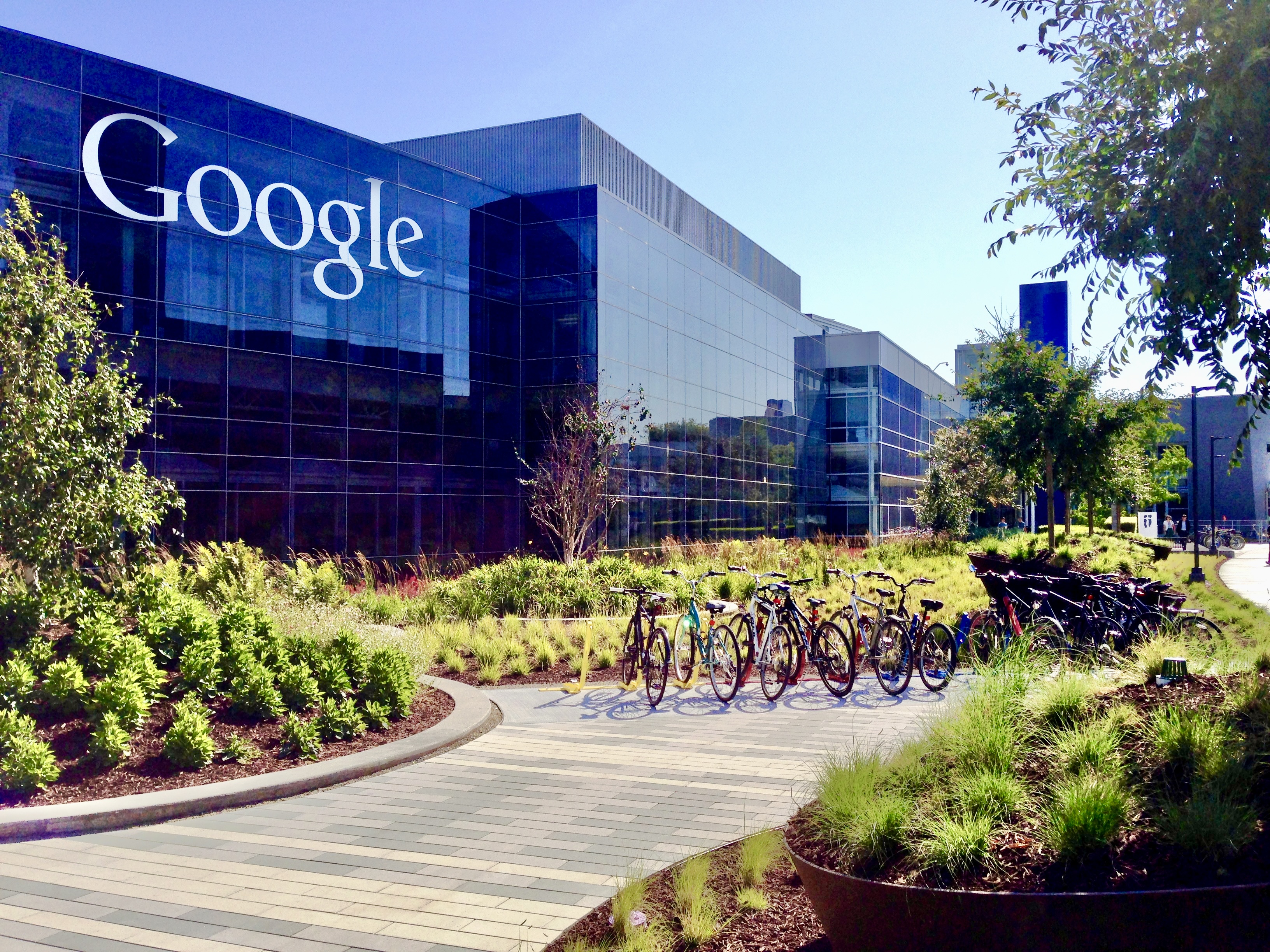
Saw a post on LinkedIn featuring an image from Google’s massive headquarters campus in Mountain View, California, the Googleplex. It transported me back to my first in-person visit there, and a WordPress post was born.

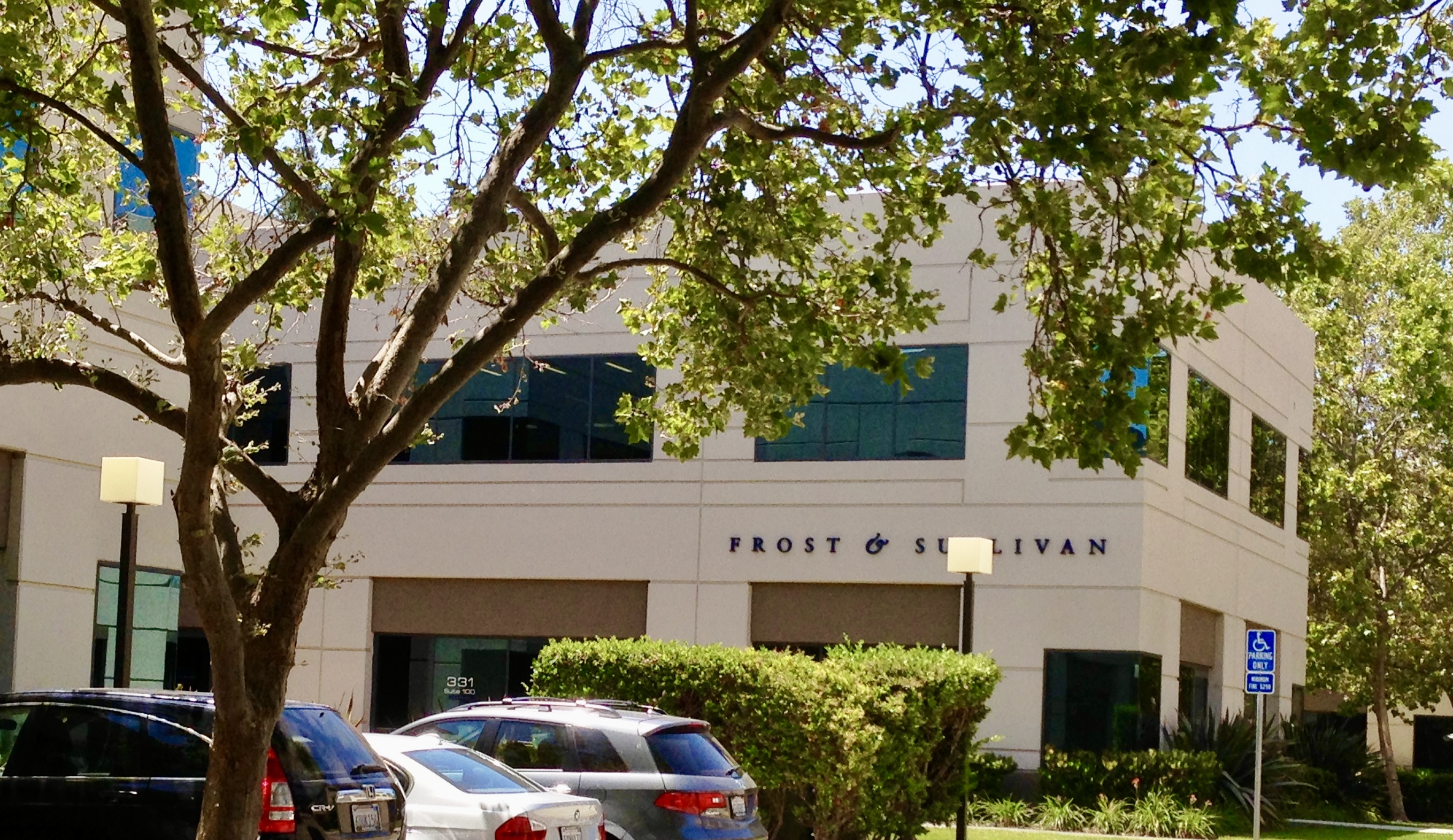
Years ago I was at what were then our Stratecast | Frost & Sullivan offices in Mountain View, California, recording videos for our clients IBM and Carbonite.

When our last video was a wrap, I took off late-afternoon for a powerwalk. Our team pointed me in the direction of a nearby overpass, and the walk was on.

The overpass led to the Stevens Creek Trail and across miles of countryside I couldn’t believe existed in the heart of the Silicon Valley. That countryside actually comprises a series of tech campuses, neighborhoods, and green spaces.

The first major landmark on my quest was the Shoreline Amphitheatre.

A current map in the area around the Amphitheatre shows a Kite Flying Area…

which explains why on the way to the Amphitheatre I powerwalked past someone flying a kite. It does not explain why they were FLYING A KITE WHILE DRIVING A GO-KART, but why not? What a great way to combine two fun activities. And it’s like that familiar phrase: “Go fly a kite while driving a go-kart!”

I would share the video I shot of the daredevil Kite-Flying Go-Kart Rider, but I guess I need special access or something called JetPack to drop a video into a WordPress post, so the image will have to do. Hit me up on LinkedIn and I’ll be happy to share the video.

Anyway, back to the Amphitheatre. The design inspiration for this cultural center came from legendary music promoter Bill Graham, who designed it to look like the Grateful Dead’s iconic ‘Steal Your Face’ skull logo when viewed from the air. From my vantage point at the intersection of Shoreline Boulevard and Bill Graham Parkway, it looked like this:

Another furlong or so across hill and dale and suddenly the current-at-that-time Google logo emerged on a building across the road in front of me. Minutes later I was at the main entrance to the Googleplex, known to Googlers and Nooglers as Plex. My research indicates this iconic glass structure that appears in so many photos may be Google B41.

Walking into this world-famous view, with Googlers and Nooglers streaming in and out of buildings and scrambling on and off vans and buses around me, felt a bit like a spiritual experience.

Stan the Dinosaur is a full-size bronze replica of the skeleton of a Tyrannosaurus Rex who menacingly greets visitors to a courtyard at Plex. (Rex at Plex™?) Google’s headquarters used to belong to Silicon Graphics, which worked on the first Jurassic Park movie. One story says that Silicon Graphics installed Stan at the campus and Google decided to keep him after acquiring the complex. Another says Google simply decided to install a giant skeletal T-Rex at the Plex. The first story sounds more logical to me, but either way, word is that Stan’s presence reminds Googlers to continuously innovate in order to prevent the company from becoming a dinosaur.

Stan somehow managed to elude my photographic eye that day, but I wanted you to see him, so I added this free-to-use image to the post.

I would share the video I shot of colorful picnic tables adjoining some gorgeous waterfall steps later in my journey, but again, the photo will have to do.

As I wound my way back from my Plexiful dream to the hardscrabble streets =:-D of the surrounding area, I passed by Google facilities at 1616 Shoreline Boulevard and 1708 N. Shoreline Boulevard.

Industry insiders will tell you The Valley can be ugly in some ways, but on this day, my corner of The Valley was peaceful and beautiful. And at just under 26,000 steps, or about 13 miles, it was a GREAT fitness day!

Life’s been good to me so far 🎶

Standard

Every time I get on a plane I have thoughts about mortality and eternity. This post shares part of its title with a song by Joe Walsh, and the title sums up how I’m feeling about things as we all go hurtling toward 2026 together.

Except for a two-year happy hiatus in Rifle, Colorado, and summer escapes to Newfound Lake, New Hampshire, much of my childhood through sixth grade was a nightmare. Over the years, though, I’ve had more fun than pretty much any 3-to-5 people I know and some minor rock bands.

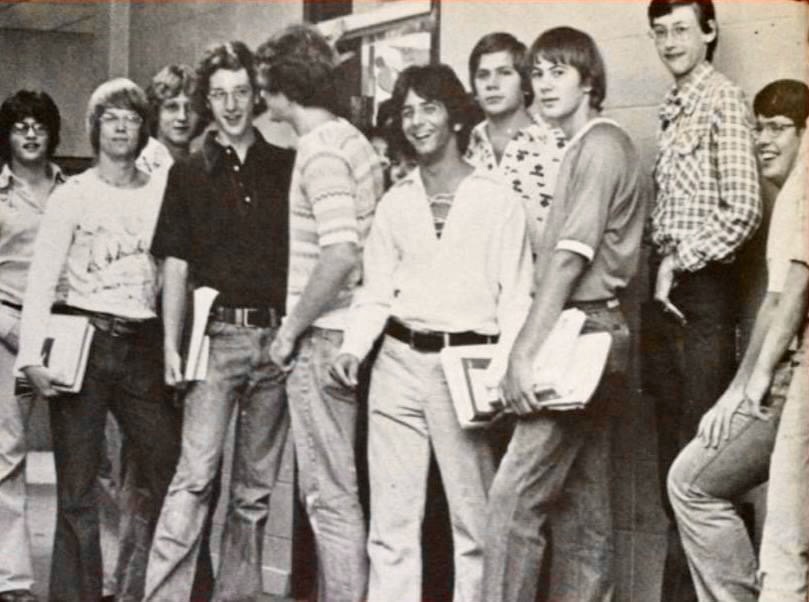
Yearbook hallway scene at Grissom High School, Huntsville, Alabama; thank you, Lynn

I’ve anticipated or survived four acquisition-to-downsizings and a chapter 11 filing by my employers to build what so far is an amazing, rewarding career, on track for a decent retirement if I ever do retire someday. All while having had the honor and good fortune to help our children and their loving spouses, in what may be the worst home ownership era for first-time buyers in modern history, buy their first homes.

I revel in the love of my beautiful family, now including a grandson and a grandpup…and our other pups who have left this world…whom collectively are the greatest people and creatures I have ever known. Only our kids post photos of their little loved ones online, so I’m not posting them here, but trust me, they’re beyond adorable.

Glorious Family Disney Trip: Michelle – Chris – Heather – Courtney – Joanne – me / This post’s featured image is from a maybe-even-more-glorious Family Royal Caribbean Cruise


I love what I do today at Cockroach Labs and have done at MongoDB, Gartner, Stratecast, and elsewhere; in our home and on our property; at the gym, in parks, and on walking trails; and at some great winetasting and craft beer venues.


I value dear friends and just met two of them, Doug and Ben, for a festive dinner at Carraba’s, Parkway Place, Huntsville. Shoutout to our son (-in-law, but to us he’s our son) Chris for getting me a killer deal at a really nice Marriott property for that trip.

We have some wonderful neighbors here in roughly the center of the US who have more than made up for the nightmare neighbors we endured in years past on one of the coasts.

I love the world-class sounds I hear in my Edifier headphones and Apple AirPods, from gorgeous, soaring movie soundtracks to high-speed, piledriving,  intense-but-for- the-most-part-not-openly-evil hard rock and metal. Many you’ve heard of and many more you probably haven’t.


As you may see in the image above, I never fall in line with ‘selected top lists’ of anything, starting with music. Can’t buy all the way into the issues and platform of any one political party, so I’m a Registered Independent.

I’ve never smoked, vaped, or used chewing tobacco in my life—with two glaring exceptions. Tried one cigarette on a Fish-and-Game Club overnight school trip in I think 5th grade, and hated it. One Saturday during high school, a bunch of us were playing a pickup game of baseball and one of the guys gave me a big chunk of chewing tobacco to try, “because big leaguers do the chew.” Five minutes later I made a diving circus catch of a long fly ball—and swallowed the whole chaw. Laid on the field for a half-hour before I felt like I could move again.

Hardest drug I’ve ever used is pot, which I never paid for but always seemed to happen upon for free from generous friends at parties in high school and my first year of college at Auburn University. That is, until 3x with different friends in far-flung locations, my respiratory system started shutting down after a few tokes. No more pot for me! Years earlier I had found myself sitting in a car in a darkened parking lot after closing time with some guys at my first job at a pizza place in Huntsville. Some of them were doing tabs of acid (yep, LSD), and one piped up: “It’s your first time, Jeff, so you should probably just do half a tab.” Did NO tabs 😊 and kept drinking my beer.

After decades of quiet-quitting meat by not eating lamb or veal because they’re baby animals, in 2016 Joanne and I, at Heather’s suggestion, went full Vegan. Yet, while Field Roast and Follow-Your-Heart produce delicious vegan cheeses, Violife makes a true-to-life Parmesan block for grating over pasta, and Hellman’s vegan mayo tastes better to us than the eggy original, no one has nailed the art of vegan cheese that works well on pizza. Good pizza is essential eating, and I love omelets and egg-and-cheese breakfast sandwiches. So a few years later we dialed it back to Vegetarian 🌱 and take B12 daily to supplement the meat we’re not eating.

I own arguably the most bada** shirt you’ll find in fine vegetarianwear, featuring the Slayer logotype

Do I love making cocktails? SEE: image below.

My family got me this shirt featuring the logotype from The Godfather

So, back to mortality and eternity. While I guess I might like to live forever, my life has already been blessed-to-spectacular. My stock phrase about whenever my time on Earth comes to an end: “It’ll save me a lot of work next month.” And if the loving animals who have been a part of our lives somehow do not get into Heaven with my family, but are herded away to Pet Heaven, I plan to arrange a Park Hopper Pass with God. That way I can go from where I’m pretty sure I’ll be—a slice of cosmic real estate I call Permanent Purgatory—and travel between People Heaven and Pet Heaven, like on weekends, or on Mondays when park traffic is lighter, so I can visit those I love most for eternity.

You want more, discerning readers, on Permanent Purgatory? Good call. To me, New York Times bestselling author Dave Barry is the greatest humor writer who has ever lived. Dave’s in a band with other writers and authors, the Rock Bottom Remainders, and he’s always calling out phrases that might be good band names. So I like to think Dave might say: “Permanent Purgatory would also be a good name for a band.”

Dave posing with one of the myriad of masterpieces he has authored: Best. State. Ever, about his home base of Florida

I’ll now bring this post to a close with some shameless plugs for Dave (which, to be clear, he did not ask for and knows nothing about):

Dave Barry on Substack

DaveBarry.com, which offers many of Dave’s legendary columns and Holiday Gift Guides at The Miami Herald and beyond

What the NCAA CFP should be

Standard

The inaugural year of the 12-team NCAA College Football Playoff (CFP) in the US has bewildered and enraged fans of the sport and generated comments by broadcasters that often revealed more about their own personal biases and financial connections than their expertise. I’ve commented about the CFP on X, and decided it was time to propose a blueprint for how it might go next year.

I started where I thought the 2024 College Football Playoff Selection Committee was starting, or should have started: the 2024 NCAAF Final Rankings. Rightly or wrongly, conference champions aside, this provides the mythical “top 12 teams who get to compete for the championship” the tournament is supposed to be about. Next, this proposal eliminates what the Committee did this year: awarding four teams home games in the first round, then every other game the rest of the way is a bowl game at a neutral site. A lot of the high-handed and wrongheaded takes about “teams who didn’t deserve to be in the CFP” has been directed at upstarts/challengers who had to take on four traditional college football powerhouses ON THOSE POWERHOUSES’ HOME FIELDS. So Notre Dame, Penn State, Texas, and Ohio State, all at home, beat Indiana, SMU, Clemson, and Tennessee, respectively. Few of the so-called media experts and social media catcallers have had the intellectual honesty to admit that most other powerhouses/football factories — including their favorites who didn’t make the CFP — would have lost those games in football-crazy hostile environments, too, and lost big.

Did #1 seed Oregon get a home game in the second round? No. It got a neutral site bowl game against what many fans now think may be the best team in college football, Ohio State, and lost handily.

On to the proposal, laid out as it would have looked using the NCAAF Final Rankings above. It makes the regular season meaningful by pitting 1 vs 12, 2 vs 11, and so on, and continues that pattern throughout the tournament with remaining high to low seeds.

1st Round would have been:
1 Oregon vs 12 ASU
2 Georgia vs 11 Alabama
3 Texas vs 10 SMU
4 Penn State vs 9 Boise State
5 Notre Dame vs 8 Indiana
6 Ohio State vs 7 Tennessee

Predicted 2nd Round:
2 Georgia vs 12 ASU 
3 Texas vs 6 Ohio State
4 Penn State vs 5 Notre Dame

Predicted 3rd Round: highest remaining seed gets a bye (the only one of the tournament). The other 2 play:
6 Ohio State vs 12 ASU

Predicted Championship Game:
5 Notre Dame vs 6 Ohio State

A final word about first-round home games

Although I’ve heard no explanation from the Committee about why four teams out of 12 got home games in this current CFP, I’m anticipating it might be along the lines of, “There aren’t enough bowl games, we needed to add four home games to make it work.”

Not buying it.

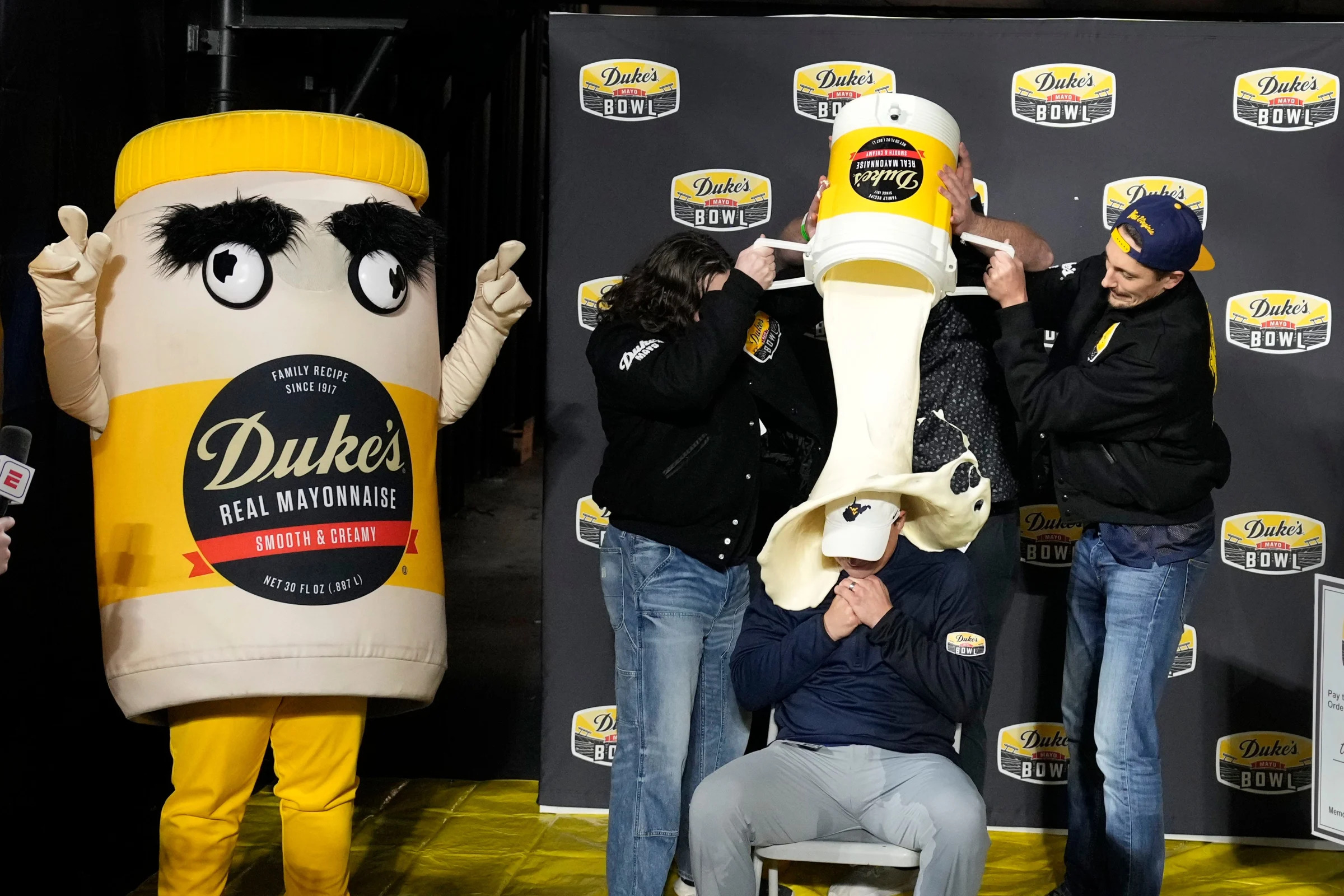
This expanded playoff has been discussed for years (and years, and years) before it finally materialized in 2024. What used to be a select lineup of college bowl games has ballooned over the years into a menagerie of colorfully-sponsored and -monikered bowl events including the Wasabi Fenway Bowl, the StaffDNA Cure Bowl, the Bad Boy Mowers Pinstripe Bowl, the TransPerfect Music City Bowl, and the Duke’s Mayo Bowl.

DON’T tell me there aren’t enough neutral-field bowl games to host four more. Or, if there truly aren’t: invent four more. Failing that: make EVERY game of the CFP a home game for someone, based on the high-to-low seeding above, and leave the neutral-site bowl games to the many other deserving teams across the nation.

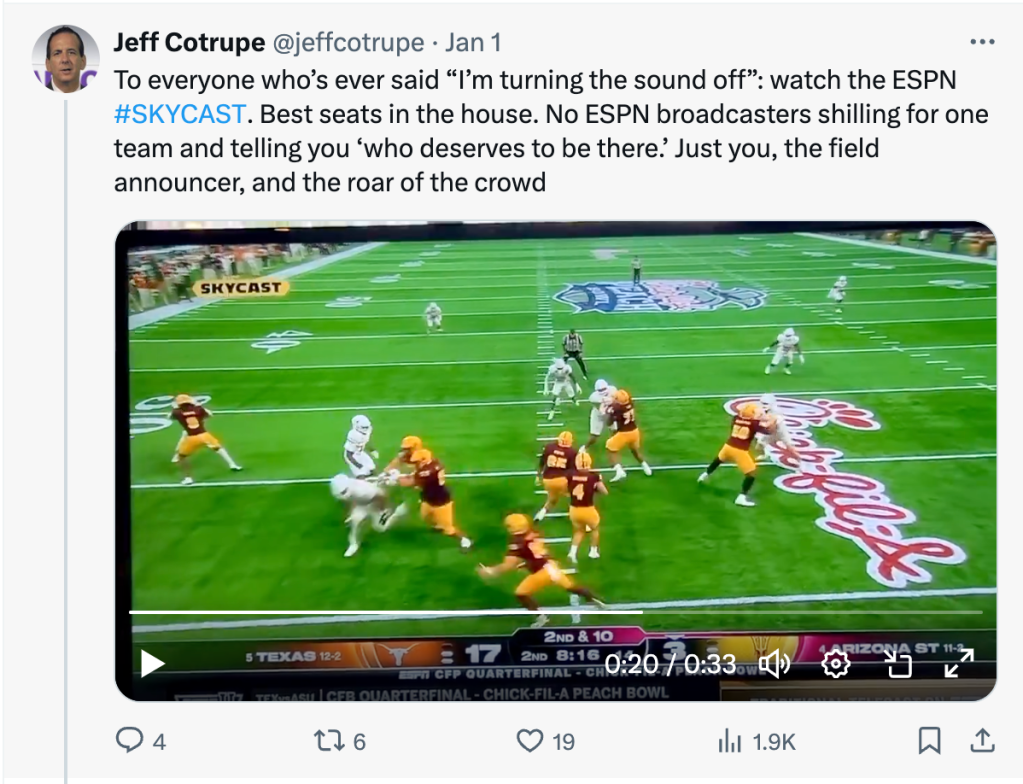
Best way to watch: SKYCAST

ESPN seems to find new ways daily to turn off fans and observers, including me, but when I do watch games on the network, my favorite way is now SkyCast. If ESPN offers SkyCast for a game, it appears on one of the ESPN channels adjacent to the main broadcast. (As does Command Center, a multi-screen enhanced version of the main broadcast.) To reprise my X post, on SkyCast you get the best seats in the house. No ESPN broadcasters shilling for one team and telling you ‘who deserves to be there.’ Just you, the field announcer, and the roar of the crowd.

A Plan to Stop Mass Shootings and All Violent Crimes Dead in Their Tracks

Standard

I have detailed thoughts supporting each of these, but we live in an era of TL:dr. So to encourage you to read this, and maybe to care and act, here are the key points of the plan:

1) Make the death penalty the law of the land for any violent crime, which I hereby define as child sexual abuse and up, regardless of the age of the assailant. No plea deals.
[Federal law]

2) Eliminate or supersede laws that prevent the state from helping the mentally ill if they or their families “don’t want to be helped.”
[Federal law]

3) Force schools to address the serious bullying that has provably and directly led to a number of these shootings. Schools who ignore issues and do not immediately engage law enforcement face legal action.
[Federal-state-local action]

4) Enact serious gun control including a ban on all semiautomatic weapons and high-capacity ammunition — not just AR-15s but any handgun or long gun that shoots many rounds in seconds — and a mandatory federal buyback program to compensate owners for the multitude of these weapons that are already in the field. “Then only criminals will have them”? See #1 above.
[Federal law]

5) Make parents financially and legally responsible if any immediate family member ever commits a violent crime.
[Federal law]

6) Return freedom of voluntary (not mandated) prayer to the schools and all public places.
[Federal law]

7) Return the every-morning Pledge of Allegiance to schools.
[Federal law]

8) Ban assault media. Get serious about banning or seriously limiting violence in all forms of entertainment from gaming to TV to movies to music.
[Federal law]

9) Install metal detectors at the doorways of schools, malls, theaters, and other currently-unprotected public venues.
[Federal-state-local action, public-private partnership]

10) Hire expert marksmen/sharpshooters for all schools, malls, movie theaters, and other currently- unprotected public venues.
[Federal-state-local action, public-private partnership]

11) If anyone breaks into any public or private place, or even without breaking in pulls a weapon on anyone in any public or public place, any citizen and anyone acting on their behalf has the right to injure or kill the threatening party without being prosecuted.
[Federal law]

12) No one who is hurt or killed while they themselves were in the commission of a criminal act as described in #11, nor their families or friends, nor anyone else on their behalf, shall be allowed to bring a lawsuit or negative action of any kind against those who hurt or killed the criminal.
[Federal law]

13) Provide tax breaks and vouchers so every family everywhere is free (and supported) to choose homeschooling or charter schools instead of public schools.
[Federal law]

14) Ban movie or book deals, or any form of compensation that originated from a violent crime, to the criminal and his or her family as far as their family tree goes, any friends or associates, or anyone acting on his or her behalf.
[Federal law]

15) Restrict media mentions of the names of those who perpetrate mass shootings to only once on each media entity’s first mention of the crime.
[Federal law]

“It’s Too Hard to Go Vegan; What Would I Eat?” The Ultimate Guide to Plant-Based Tastes

Gallery

[First published in 2019, but an ongoing labor of love updated as recently as February 2022]

To me, “going vegan” was not about being trendy or better-than-thou, showing anyone up, or guilting anyone into doing what I have come to believe is the right thing. It’s just what my wife and I have done in our household after our younger daughter introduced us to it back in 2016.

Below you’ll find links leading to literally thousands of choices ranging from tasty to delicious to downright delectable. In this piece, we:

  • Lead off with the fast-growing lineup of plant-based fare available at restaurants and on the go
  • Move from there to the incredible diversity of plant-based foods ready to tempt your tastebuds on the homefront, including (yes) “The Tesla of Chicken”
  • Follow it all up with Q&A, the science, thoughts, and opinions

A programming note: this post is rigorously sourced, but I couldn’t get references to click to the endnotes for you. Links that simply open to company websites and the like, not part of a news story, are embedded in text. Those sourced from research reports and news stories have a notation, from |a| to |z| and more. Either way, all links open the way God intended them to: in a new tab =;-D At post’s end you’ll find all endnotes with sources, titles, and the same links.

Eating On the Go: Plant-Based Burgers ROCK

These burgers feature something that would surprise those who haven’t tried them: THEY TASTE GREAT. Even if I weren’t a plant-based enthusiast, I would never go back to “regular” burgers.

As reflected in the opening image, we love Beyond Meat Burgers at TGI Fridays. Having had every burger Fridays makes over the years, to us these are the best and tastiest on the menu. We are also proud and happy $BYND shareholders.

Burger King rolled out its Impossible Whopper to rave reviews across the US and Impossible products are available in a handful of other countries. Beyond Meat products have far greater reach, currently sold in the US parts of EMEA, APAC, and Latin America. Both companies are of course looking to expand into other markets. Continue reading

Your data needs to keep up with the state of play today. Event-driven architecture will get you up to speed

Gallery

The Pop-Up Playground Party at AWS re:Invent 2019, sponsored by MongoDB and Confluent, was an exclusive, interactive event featuring immersive art, light, gaming, and play activations with an open bar, DJs, and more, at the Industrial Las Vegas.

Attendees got to create unforgettable memories (or at least killer Instagram photos) at the glowing ball pit, DIY graffiti walls, retro arcade games, and other immersive activities, such as getting a temporary tattoo in a sports car. Meanwhile, the Hood Internet and Vegas’s hottest DJs kept the soundtrack fresh all night long!

In a word, the Pop-Up Playground was: fun.

Something that is way less fun: being one of the many companies that increasingly find it impossible to keep up with the pace of business because their data platforms can’t keep up. Under those circumstances life is anything but a party, in fact, the opposite of a party. 

That’s why MongoDB and Confluent teamed up, not just to throw the best party at re:Invent but to help companies run their businesses in real time. 

An effective approach to real time could not come at a better time, because many companies are still trying to meet their data needs in ways that don’t match modern business reality. Some are mired in 40-year-old relational database technology. Others think updating to a NoSQL database is positioning them for the future. They soon learn that while getting data in may be easy enough, getting insights out is a whole different story, and what they are actually positioned for now are niche applications, not an effective new data strategy.

The results of pursuing the wrong data strategy can be harmful or fatal. CNBC Markets found that the average lifespan of S&P 500 companies has fallen from nearly 60 years in the 1950s to less than 20 years today. Innosight modeled the rate of attrition from the S&P 500 and predicted that over the next 10 years, half the companies will be replaced: drop out, go out of business, or be acquired, as digital transformation lowers barriers to entry for new players and helps drive out incumbents trapped in legacy infrastructures and processes.

The traditional request-driven data architecture that still exists at many companies helps keep them trapped in legacy limitations. It requires users and applications to make requests and wait until the requested information becomes available. Waiting for data kills opportunity and agility.

By contrast, event-driven architecture, which I posted about on jeffcotrupe.com,  proactively makes a stream of data from source systems (producers) available in real time. Consuming applications and services (consumers) subscribe to topics of interest and consume data at their own pace. Capturing and acting on events in real time enables systems to react automatically and immediately to events. This helps a company rapidly position itself to outflank competitors. Detecting operational errors lets it take immediate corrective action. These benefits translate into not only operational excellence and cost savings but also enhanced customer experience as the company optimizes customer-facing processes. More broadly, an event-driven architecture helps the organization improve business agility.

The key driver today in making the need for real-time data an organizational imperative is the emergence of microservices. Microservices architecture breaks up monolithic applications into small, discrete services or functions. It creates self-sufficient sprint teams empowered to bring new capabilities online independently of each other, then over time evolve and upgrade their microservice without impacting adjacent microservices. That is the essence of agility.

As beneficial as microservices can be, though, they require the ability to work with large volumes of data that change frequently, which is a challenge many existing systems cannot meet. Trying to implement microservices in a legacy relational database incurs the pain and friction of having to define a schema in the database and re-implement that same schema again to effect object-relational mapping (ORM) at the application layer. Then your development team has to repeat the process, first for each microservice and then every change to the data model as application functionality evolves.

With MongoDB, data modeling for microservices is easy, which is a big reason MongoDB is at the core of many event-driven systems today. MongoDB’s flexible document model gives you the best way to work with data, lets you intelligently place data where you need it (and when, as in immediately), and gives you the freedom to run anywhere. MongoDB helps you move at the speed your users demand. It gives you the power to launch new digital initiatives and bring modernized applications to market faster, running reliably and securely at scale, unlocking insights and intelligence ahead of your competitors.


By starting with the core MongoDB data platform and binding in complementary technologies, MongoDB provides the data persistence heart of an event-driven architecture. MongoDB and Confluent work together to enable you to readily build microservices and event-driven architectures to become an agile organization.

Confluent Platform, including Apache® Kafka® and Kafka Connect, is designed as an event messaging queue for massive streams of data that sequentially writes events into commit logs, allowing real-time data movement between your services and data sources. The MongoDB Connector for Apache® Kafka® — developed and supported by MongoDB engineers, and verified by Confluent as a first-class component of Confluent Platform — simplifies building robust, reactive pipelines to move events between systems. You can use MongoDB as a sink (consumer) to ingest events from Kafka topics directly into MongoDB collections, exposing the data to your services for efficient querying, enrichment, and analytics, as well as for long-term storage. You can also use MongoDB as a source (producer) for Kafka topics; in this mode, data is captured via Change Streams within the MongoDB cluster and published straight into Kafka topics. These capabilities enable consuming apps to react to data changes in real time.

MongoDB-powered event-driven architectures are at work in a range of user cases including IoT and other time series applications; financial services; AI; predictive maintenance, primarily in manufacturing but also in other verticals; Web activity tracking and log aggregation; and as an operational data layer (ODL) integrating and organizing siloed enterprise data to make it available to all users and consuming apps. Customers who have deployed event-driven architecture powered by MongoDB include Ticketek, EG, ao.com, Man AHL, and comparethemarket.com

The figure below shows MongoDB and Confluent working together in an event-driven architecture supporting a microservices-based e-commerce application.

In this scenario, fuel costs to ship some items have just gone up, which could impact pricing. This produces events about the cost increase and places them into Apache Kafka. The Pricing microservice consumes the event, analyzes it against existing data, and produces events conveying the new pricing. MongoDB Atlas captures this data and, through the MongoDB Connector for Apache Kafka, publishes it into Kafka topics, which makes the data available to all consumers. Microservices directly impacted by pricing changes, such as those that manage inventory, marketing, promotions & coupons, point of sale (POS), and the e-commerce provider’s order management system (OMS), consume the price change events and update their individual databases accordingly. MongoDB Atlas aggregates and persists data from all microservices, enriches event streams with data from other sources, including historical data, and provides a central repository. This enables applications and users to benefit from all data across all microservices and provides a unified view of state across the e-commerce provider’s enterprise.

To learn more, download our white paper, How MongoDB Enables Real-Time Data with Event-Driven Architecture, and visit our Real-Time Analytics page.

Mac Links LIVE!

Gallery

For I think 10-15 years now I’ve been using the Office suite on PC to make PDFs of Word, Powerpoint, and Excel files and never gave links a second thought. You embed links in text like this in the source file and they’re live in the PDF. Fonts and layout are identical to what you created in the source file.

Not on Mac.

Oh, if you simply type out links as text, e.g., https://www.crunchbase.com/person/jeff-cotrupe, they do save as live links in PDFs. But it is self-evident why that is sub-optimal. Pretty much everywhere in all applications people embed links in all content like this, and that is the standard.

Create a file in Office on the Mac, save as PDF and you’re presented with two choices:

  • Saving your PDF as “Best for printing” preserves fonts/layouts but kills the links.
  • Saving as “Best for electronic and accessibility (uses Microsoft online service)” gives you live links, but is also dependent upon which fonts Microsoft has loaded on those servers. In any file I’ve ever tested, this method massacres fonts and layouts and is unworkable.

After much experimentation and testing, here are the only two ways you can use Word on a Mac to create PDFs with embedded live links AND the fonts and layout of your choice:

[1] Use Word for Mac to create your doc. Save as Best Print Quality. Your embedded links are dead. Buy Acrobat Pro DC for $450 or license it for a year for $180. Open your PDF and the source Wordfile. Copy link locations for all links in Wordfile and paste them in into new link boxes you create over those same words or phrases in PDF.

[2] Buy Parallels, Windows 10, and Office for your Mac. Parallels virtual machine frees Word to do on Mac what it does on PC: save embedded live links in PDF. Not sure what it cost my company to buy Parallels and Windows 10 licenses, and the new separate license for Office to use in Parallels.

Long way and lot of money to go just to create live links AND not demolish your fonts and layouts when saving Word to PDF on a Mac, right? But those are your choices.

I bet Microsoft, Apple, and Adobe could get together and fix this in a New York (or Seattle, or Silicon Valley) minute. But there’s a lot of money changing hands in #s 1 and 2 above, so…

I’m now at MongoDB!

Gallery


I am now a proud member of the Product Marketing team at MongoDB: the first database company to go public in more than two decades (NASDAQ: $MDB), its business growing at ~50% YoY, with the technology and vision to take on the multibillion-dollar incumbents as it disrupts and reshapes an entire industry. As an analyst I had forecast a total market opportunity of $67.89 billion in big data and analytics by 2019, growing to nearly $111 billion by 2022. I am excited to be at a truly global company capturing a sizable and growing share of that opportunity!

My role is Senior Solutions Marketing Manager, a core part of an energetic and globally distributed team reporting to the Senior Director, Products and Solutions, based in the UK. I am responsible for driving solutions marketing and GTM content positioning the UVP of our product/services portfolio to a senior audience.

If you are not already using MongoDB, let’s talk about what it can do for you and your organization. If you are, I’d like to hear how you are doing. You can find me at any contact point on the Connections page and I’ll be in touch soon.

WELCOME to a more competitive e-commerce market

Gallery

Attended the eTail West event two years running…placed two online orders during roughly the same period with a company I lovingly dub the Retail Death Star…had a deadline to meet for the IDG Infoworld blog…and it led to one of my most fun-to-write blog posts ever. The WELCOME mat above plays a pivotal role in the piece, but IDG wouldn’t run this photo because it doesn’t publish anything but its own internally approved pix. So here it is in all its boldly leaf-strewn glory, beckoning you to walk right over it and enjoy all the e-commerce action here.

Before I go: some of the arboreal wonders giving the mat that leafy look.