

If you put out materials for recycling, do you know where they go?
We’ve been recycling for decades, first in California and since 2016 in Indiana. In California, at least where we lived, it was mandatory; we were given three stackable mini-bins to separate plastic/glass/paper and a green waste cart the size of the regular trash cart. In Indiana we pay an extra fee to get our loaded-to-the-gills recycling cart picked up every two weeks, while our nearly-empty trash cart is picked up faithfully every week.
Alert readers may have spotted “high seas” and “gills” and thought: foreshadowing. I invite you to keep paddling. But first, a quick reality check: this is not a climate activism/Green New Deal treatise. To us, recycling is not political. It’s logical, and responsible. It comes from being raised to fix, mend, and reuse things whenever you could instead of, in Mom’s words, “throwing away and buying new.”
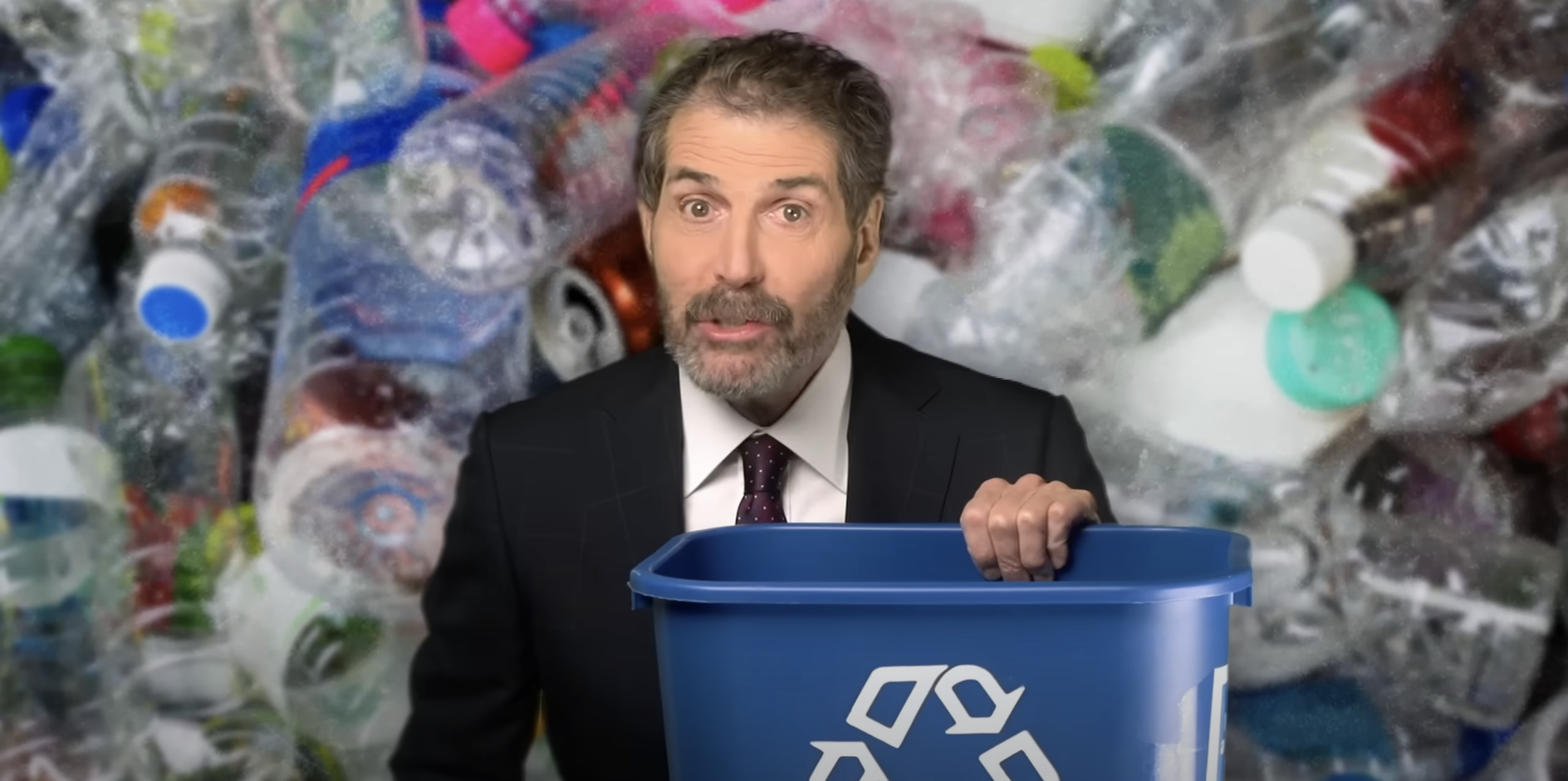
In addition to recycling, another thing we’ve done for decades is enjoy and learn from reports by common-sense independent reporter John Stossel. One of his recent videos showed how companies and countries are shipping plastic “recycling” to various parts of the world, creating plastic mountains on land and floating masses of plastic in the world’s oceans, including…
The So-called ‘Great’ Pacific Garbage Patch
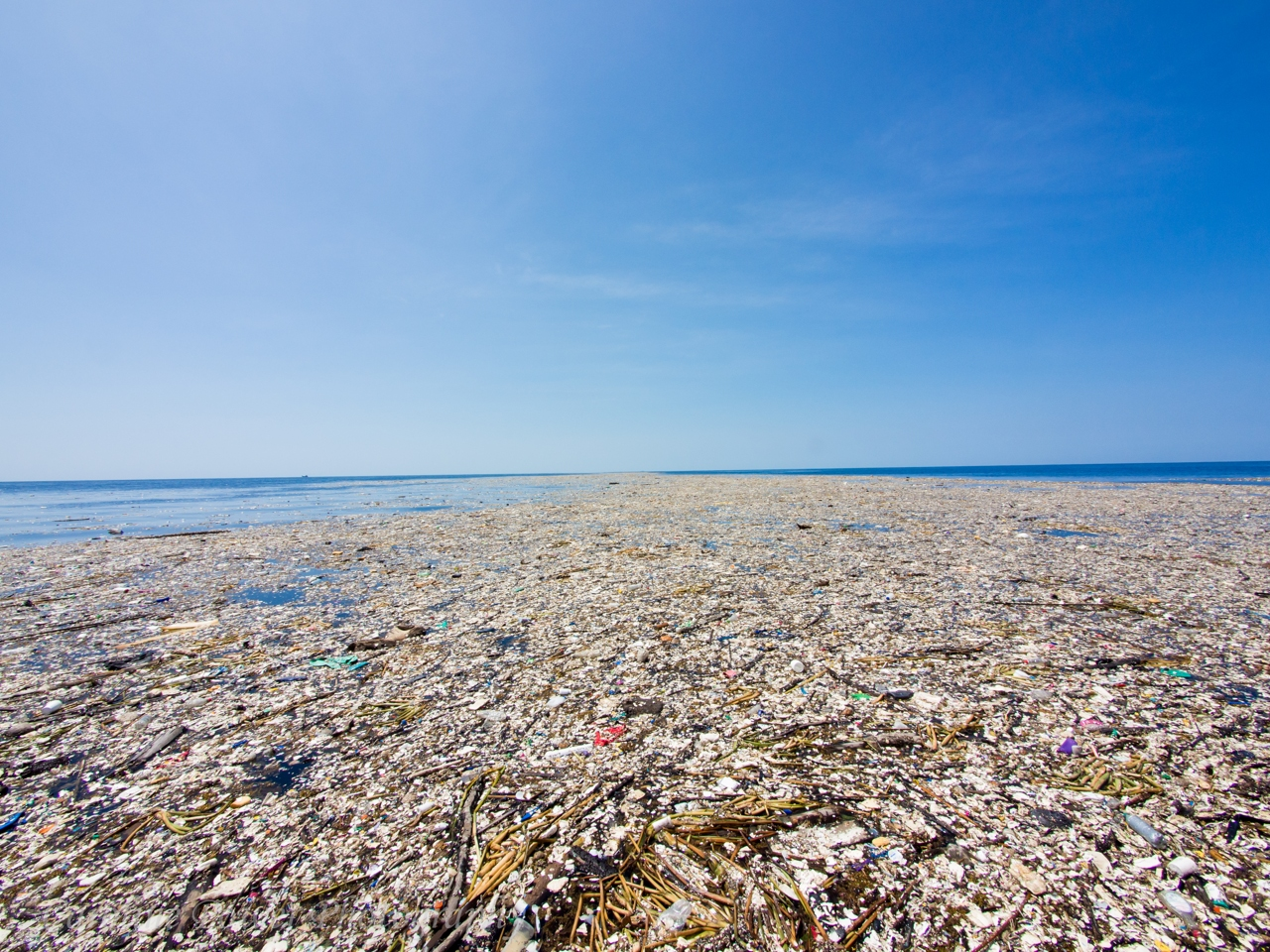
This man-made monstrosity is made up of the ugly, drifting remnants of what passes for human civilization today. Per National Geographic, the Great Pacific Garbage Patch is a murky soup of plastics in the North Pacific Ocean, also known as the Pacific trash vortex.

The Patch actually comprises two sub-patches: the Western Garbage Patch, in Asia-Pacific waters, and the Eastern Garbage Patch off the US West Coast. This bifurcated blight is actually composed of many separate floating islands of plastic and other debris that have loosely coalesced into larger masses.

Accurate 2024 data is hard to come by, but data from 2018 is sickening enough. Researchers from the Ocean Cleanup project calculated, as quoted on Wikipedia, that by 2018 the Patch already covered 620,000 square miles and contained somewhere between 45,000 and 129,000 metric tons of plastic. Years later, by the end of 2024, Ocean Cleanup had removed more than a million pounds of debris from the Patch — which by then was a maddeningly minuscule 0.5% of all that was out there. Some of the plastic in the Patch is 50 years old.
All of this had us ready to start placing our plastic “recycling” in our trash. We figured it was better to force them to deal with it in the US than have it shipped off to strangle fish and birds in the world’s oceans, or pile up in faraway lands.

First we posed some hard questions to our waste management provider. What we learned in a thoughtful, personalized response from Republic Services has us continuing to place plastics in our recycling bin — and trying to connect Republic and Stossel for an interview.
What Republic Services is Doing About Plastics
For material to be recycled, there must be an end market for it: a customer who wants to reuse that material. In the US today, there are robust end markets for PET (plastic #1, such as water or soda bottles), HDPE (plastic #2, such as milk jugs or detergent bottles), and Polypropylene (PP #5, including things like yogurt cups, margarine tubs, and to-go cups). Other plastics, for which there are limited end markets, include flexible plastics like grocery or trash bags, and Styrofoam.
Republic Services operates 75 US recycling facilities that recycled 300 million pounds of plastics in 2024. Republic told us PET, HDPE, and Polypropylene make up more than 90% of the plastics it collects and processes at its recycling facilities. As Republic customers putting these items in our blue cart (which Republic delivery support calls a “toter”), our household plastics are getting recycled, and in North America: Republic does not export plastics overseas.
Next-Level Recycling: Bottle-to-Bottle Circularity
Today many plastics are downcycled into things like carpet, clothing or construction pipe. While this is better than sending materials to a landfill, there are few options for further recycling of these products, so ultimately they become more waste.
It is literally, to borrow an overused political cliche, “kicking the can [or in this case, plastic bottle] down the road.”
To stop recycling from being a one-and-done affair, Republic Services is currently developing a network of plastics recycling facilities it calls Polymer Centers to help ensure bottle-to-bottle circularity: enabling a water bottle to be recycled into another water bottle, a detergent jug to be recycled into a new jug, and so on, to keep the materials within the Circular Economy over the long term. The company began operations at its first Polymer Center in 2023, and as this post goes live it is getting ready to officially open its second one, in Indianapolis, in 2024.
“But Only 9% of Plastics are Recycled. It’s a Losing Battle.”
A frequently cited statistic is the EPA figure that only 9% of plastics are recycled. While this is accurate, it is also misleading, because it refers to all plastic produced, including durable goods like auto dashboards and bumpers, consumer electronics, and medical devices. Those aren’t manufactured to be recycled — at least not through existing, large-scale recycling processes. Republic did not provide insights into what can be done, or what it may be planning, to deal with that other 91%. If I had to bet where a solution will someday be found, though, my money would be on a recycling-forward provider like this one.
Sole-source Recycling (One Cart) is Better. Government Apathy is Not
Other questions we asked were: When are you going to make recycling required in Indiana as it was for us in California? And when are we going to get stackable mini-bins to separate plastic, glass, and paper? The reality is that Republic Services and other waste management companies can’t mandate recycling; they contract with customers to provide the services they choose. Republic noted that Indianapolis is the largest city in the U.S. without regular recycling service, and that city leaders must decide to offer or mandate recycling. We love Indy’s big-city culture, major sports, fine dining, low-hassle airport, and more, without the big-city problems that plague other metropolitan areas, but it is behind the curve on recycling. Living 45 minutes out of Indy, we’re even further off the pace. There is some good news, though: our city now applies a discount to the trash portion of our Republic bill to compensate in a small way for the fact that we choose to pay extra to voluntarily recycle.
CTA: What Are YOUR Waste Hauler and Local Government Doing About Recycling?
What we’ve learned leaves us wondering what other waste management companies and governments in all of the so-called “advanced” nations — those of us who consume the most products and create the vast majority of the world’s plastic waste — are doing about this.
Some of the best pieces of communication leave you with a call to action (CTA). So here is ours: We challenge you, ALL of you, to ask your waste management company and your local government what they are doing about recycling in general, and plastics recycling in particular. That Disastrous Pacific Garbage Patch (my term) isn’t creating itself, and it’s not going to go away on its own. Unless we want our planet to keep going to hell in a Vinylized Plastic Handbasket, we need to push for every bit of household plastics to be recycled, and new processes to pulverize that 91%.
When you find out what companies and leaders are doing, let me know? Send a comment here.
And John, when you have a moment, can you reply to my email? Or call me?
 It Was Just a Thought™